

Your Leading Yuyao Yide Fluid Power Co., Ltd. Supplier
- Yuyao Yide Fluid Power Co., Ltd. is a professional manufacturer of hydraulic fittings. With more than 10 years of manufacturing and management experience in the hydraulic pipe fittings industry, we have become a major supplier of hydraulic adapters in manufacturing industry of China and a high-quality OEM manufacturer of international hydraulic components brands.
- The factory implements ISO9001 management system, advanced equipment manufacturing high quality hydraulic pipe fittings. Hydraulic pipe poducts are mainly exported to Europe, the United States, Japan and South Korea, while providing European brands with efficient OEM manufacturing of hydraulic pipe fittings. Our hydraulic pipe fittings include DIN2353/ISO8434-1 hydraulic fittings, hose fittings and hydraulic valves.
- Available in various thread sizes, ISO6149, Metric, BSP, NPT, NUF, SAE flanges, etc.
- Hydraulic components are available in materials of carbon steel, stainless steel, and brass.
- Provides zinc-nickel alloy and free chromium-6 coating.
- We are committed to providing high quality hydraulic fittings and service for field of engineering and fluid power.
Why Choose Us
Competitive price
We have a professional purchasing team and costing team,trying to reduce costs and profits,and provide you with a good price.
24h online service
You can contact us to inquire about pre-sales, sales, and after-sales services, and we will give you a very satisfactory.We are at your service online 24 hours a day.
Quality control
For each process,we have strict inspection standards,and we always insist that quality is life.
One-stop Solution
With rich experience and one-to-one service,we can help you choose products and answer technical questions.


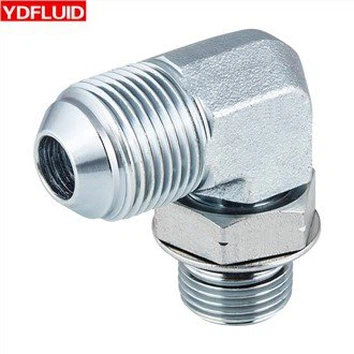


Most commonly used as hydraulic fittings in the fluid power industry, JIC (Joint Industry Council) fittings are a type of flare fitting machined with straight threads using a 37° flare seating surface. This is used to form the seal of the fitting instead of an o-ring or tapered threads. Though they have identical dimensions, JIC fittings should not be confused with AN (Army Navy) fittings, and the two should not be considered functionally interchangeable.

Benefits of JIC Fitting
Leak-proof connections: JIC fittings are designed to provide a tight and leak-proof connection.
Easy to install: JIC fittings are easy to install and require simple hydraulic tools.
Wide range of sizes: JIC fittings come in a wide range of sizes to accommodate various hydraulic system requirements.
Interchangeability: JIC fittings are interchangeable with other fittings, allowing for increased flexibility in design and application.
Cost-effective: JIC fittings are an affordable option for hydraulic systems. They do not require expensive equipment or skilled labor.
Versatility: JIC fittings can be used in a variety of applications, including industrial, automotive, and aerospace industries.
Low maintenance: JIC fittings require little maintenance and can last a long time with proper care.
High pressure capabilities: JIC fittings are able to withstand high pressure hydraulic systems.
Corrosion resistance: JIC fittings are resistant to corrosion, which reduces the risk of system failure.
Improved safety: JIC fittings are designed to minimize the risk of hydraulic system failure and improve overall safety.
Types of JIC Fitting
There are several types of JIC fittings, including:
JIC 37° flare fittings: the most common type of JIC fitting, these fittings feature a 37° flare seat that provides a tight seal between the fitting and the mating surface.
JIC 45° flare fittings: Similar to the JIC 37° flare fitting, but with a 45° flare seat.
JIC flareless fittings: Also known as the "bite-type" fitting, these fittings use a metal-to-metal seal to provide a leak-proof connection. They are commonly used in high-pressure hydraulic applications.
JIC O-ring face seal fittings: These fittings use an O-ring to create a leak-proof seal, and are often used in applications where vibration or shock may be present.
JIC union fittings: These fittings are used to connect two sections of tubing together, and feature a male and female JIC thread.
JIC bulkhead fittings: Designed for use in panel or bulkhead applications, these fittings feature a nut and sleeve that are installed from one side of the panel, while the fitting itself is installed from the other side.
Applications of JIC Fitting
Military
In the past, JIC fittings were also referred to by the military specification MIL-F-18866. While that specification has been superseded by SAE J514, many industries and their designers continue to refer to JIC fittings in this way. In the military today, JIC fittings are primarily used in fuel delivery applications, connecting control valves with hydraulic tubing.
Aerospace industry
JIC fittings see heavy use in the aerospace industry by commercial airline manufacturers, NASA, and privately owned space companies. They can be found in commercial airliners, airline ground equipment, and aerospace fluid systems.
Plumbing industry
JIC fittings also see use in flexible plumbing systems joining together tubing in a hydraulic system. They can be attached to a hose as an adapter for female SAE swivels, allowing versatility and flexibility wherever necessary within the system.
Components of JIC fittings
JIC fittings typically consist of four components:
JIC nut
This is a hexagonal shaped outer sleeve that threads onto the fitting and provides the necessary clamping force to secure the assembly. The nut is usually made of steel, stainless steel, or brass.
JIC sleeve
This is a metal sleeve that fits over the end of the tube or hose and is used to form a seal between the fitting and the tube or hose. The sleeve is typically made of steel, stainless steel, or brass.
JIC body
This is the main body of the fitting and typically consists of a male or female threaded end that allows it to be connected to other fittings or components. The body is usually made of steel, stainless steel, or brass.
O-ring seal
This is a small rubber or elastomeric seal that is placed inside the fitting to help create a leak-tight seal between the JIC sleeve and the fitting body. The O-ring is typically made of nitrile, Viton, or other polymers.
How to Maintain JIC fittings
JIC fittings are reliable and strong hydraulic fittings used in high-pressure applications. Here are some tips for maintaining these fittings:
Regular inspection
JIC fittings must be inspected periodically for damage, wear, and looseness. This can help identify issues before they become bigger problems, and avoid hydraulic fluid leaks.
01
Lubrication
The threads of the fittings should periodically be lubricated with high-quality lubricant to avoid corrosion and ensure smooth operation.
02
Proper installation
JIC fittings should be installed correctly, with the correct torque settings, and by a qualified professional. Loose fittings can cause leaks and damage to the hydraulic system.
03
Cleaning
The equipment and fittings should be cleaned before they are installed to prevent contamination that may cause damage to the system.
04
Use high-quality fittings
Always use high-quality fittings that are reliable and have been tested for quality and performance.
05

The JIC fittings consist of three components to make a Tubing assembly: body, nut, and sleeve.
JIC fittings rely on metal-to-metal contact between the finished surface of the fitting nose and the inside diameter of the flared tubing to make a seal. SSP takes great care in the manufacturing process to produce a flared nose surface that far exceeds published specifications. High quality finishes reduce the likelihood of leakage due to irregularities in the flared tubing.
As the fitting nose and flared tubing are drawn together, they are supported by the fitting sleeve, which distributes the compressing load caused by the nut as it is threaded onto the fitting body during assembly. An installed SAE flared tube fitting system is easy to identify. The sleeve protrudes out the back of the nut. This extension provides the tubing with additional support and lessens the longitudinal load on the fitting nose.
SAE flared tube fittings are available for fractional and metric tubing. Metric assemblies are constructed with standard fractional bodies, and metric nuts and sleeves.
JIC fittings are compression fittings that have parallel threads and a 37-degree flare seating surface, as specified by SAE J514 and ISO 8434-2. The JIC 37-degree fittings are compatible with SAE 37 fittings, making them easily interchangeable. 37-degree fittings are used in higher pressure applications. Comparatively, the SAE 45-degree fittings are used for low pressures, such as automotive, air conditioning and refrigeration.
The most common materials for JIC 37 hydraulic fittings are carbon steel and stainless steel. Their parallel threads seal on a metal-to-metal surface, and the flared tube surface can be reliably sealed and re-sealed, making field replacement easy.
JIC is available in sizes ranging from -02 up to -40. A dash size is the determination for tube, hose and fitting measurements, measured in 1/16-inch increments. For instance, a -04 = a 4/16 or ¼ inch ID hose and a -32 = 32/16 or 2-inch ID hose.
JIC 37 Degree Fitting Assembly Instructions
- Lubricate the threads and cone with hydraulic fluid or light lubricating oil.
- Align mating components and turn flare nut by hand until sealing surfaces make contact.
- Torque the nut to the values shown in the table below. If there is a wrench pad next to the nut, place a second wrench on the pad to prevent the flare from rotating while it’s being torqued.

Over-tightening: JIC fittings require just the right amount of torque to ensure a tight seal. Over-tightening can damage the fitting and cause leaks.
Using incompatible fittings: JIC fittings are designed to be used together with other JIC fittings. Using non-compatible fittings can result in leaks or incomplete seal.
Not properly preparing the joint surface: Adequate preparation of the joint surface is necessary for proper sealing. Surface should be uniformly flat and clean of any grease, dirt or debris.
Not using the correct sealant: The right sealant should be used to ensure proper sealing. The sealant should be compatible with the media being conveyed and the working temperature.
Using shortened threads
Shortening a thread on a JIC fitting can compromise its integrity, making the fitting vulnerable to breaking.
Fitting orientation
JIC fittings have specific orientations depending on their role in the fluid system. Incorrect orientation can cause fluid leaks, pressure drops, or affect the flow rate.
Defective/faulty fitting
Inspecting and testing JIC fittings before installation can prevent defects from being installed, leading to system failure.
How do I identify my JIC fittings
Look for markings: The most common way to identify JIC fittings is by looking for markings or labels on the fittings themselves. JIC fittings are typically marked with “JIC” followed by a number, which indicates the size of the fitting.
Measure the threads: JIC fittings have a 37-degree flare angle with a 60-degree thread angle. Measure the angle of the threads on the fitting to confirm if it is a JIC fitting.
Check the size: JIC fittings are commonly found in sizes ranging from 1/8 inch to 2 inches. Use a measuring tape or caliper to determine the size of the fitting.
Consult a chart: Many manufacturers provide charts that can help in identifying JIC fittings by their specific designations.
JIC & JIS Fittings
What Are JIS Fittings
JIS fitting is a type of hydraulic fitting that is commonly used in Japan and other Asian countries. Like JIC fittings, JIS fittings are used to connect hydraulic hoses and tubes in a variety of applications, including industrial machinery, construction equipment, and agricultural machinery. JIS fittings are characterized by their 30-degree flare angle, which is slightly different from the 37-degree flare angle used in JIC fittings. This flare angle creates a reliable seal between the fitting and the hydraulic hose or tube, and helps to prevent leaks under pressure. JIS fittings come in a range of sizes, from small diameters used in low-pressure systems to larger sizes used in high-pressure applications. They are often made of steel or brass and can be either male or female fittings.

JIC (Joint Industry Council) and JIS (Japanese Industrial Standard) fittings are two different types of hydraulic fittings, each with its own unique characteristics and uses. Here are some of the key differences between these two types of fittings:
1.Flare angle: The most significant difference between JIC and JIS fittings is the flare angle. JIC fittings have a 37-degree flare angle, while JIS fittings have a 30-degree flare angle. This difference in angle affects the way the fittings seal and connect to the hydraulic tubing or hose.
2.Thread type: JIC fittings typically have Unified National Fine (UNF) threads, while JIS fittings have metric threads. This means that JIC fittings may require different tools and adapters than JIS fittings when installing or repairing hydraulic systems.
3.Standards: JIC fittings are governed by SAE (Society of Automotive Engineers) standards, while JIS fittings are governed by Japanese Industrial Standards. This means that the specifications and performance standards for JIC and JIS fittings may differ slightly.
Certifications

Yuyao Yide Fluid Power Co., Ltd. is located in Yuyao City, Ningbo, China. It is a well managed fluid-connectors manufacturing enterprise.

FAQ
Yuyao Yide Fluid Power Co., Ltd. is well-known as one of the leading jic fitting manufacturers and suppliers in China. Please rest assured to buy or wholesale customized jic fitting made in China here from our factory. Contact us for more details.